Blog

Succeeding as an Accounting Entrepreneur

Succeeding as an Accounting Entrepreneur

As an entrepreneur, managing your business can be made simple. With a little knowledge, expertise and some sound practices and motivation, Accountants can run a successful business and remain in practice for the long haul.

Finding the formula to success requires having the right employees, the right habits, and the necessary tools. Learning from already successful companies and having sound business practices in place is essential in creating a profitable accounting practice. Here are eight guidelines to help you achieve this.

1.  A compass for your business

According to a study conducted by the Harvard MBA programme, writing down goals for your business will make a huge impact on your success. Firms without goals experience significantly less growth than firms that have written goals and plans. However, your entire team needs to be on board with these goals, so engage your employees with an inspiring vision and clear objectives.

2. Tech-up your operations

Digital transformation continues to be top of the list of priorities, enabling a business to continue operating in today’s fast-paced digital environment. Digitisation should include continued remote working capabilities, digital marketing tools, cloud-based accounting software, and enhanced cyber security. Firms must adopt an online platform where customers can easily do business with them, for example, a website and social media platforms.

3. Hybrid working conditions

Accounting firms will need to consider adopting a hybrid working environment, as some clients will operate online, but others will prefer more traditional ways of conducting their financial affairs. Remote working can help with the needs of the business and its clients, as well as for employees.

A significant positive of remote working is that business owners can now offer their accounting services beyond our borders to other countries. It also means that local businesses can now employ staff remotely, as their location is not important in many instances.

4. Branding trends

Customers are omnichannel these days, meaning that they engage with businesses through various channels including different social platforms, text, email, live chat, and others. By providing quality omnichannel support, you show them that you value their business. As you begin, you may not be able to sell everywhere, so scale your omnichannel strategy as you learn more about your target audience.

5. Listen to your customers

Listening to feedback from your customer base is crucial. In studies conducted, a good portion of a company’s business comes from customers who are referred by current customers. Happy customers will also be recurring customers; people are 10% less likely to shop around if they’ve used your company before and were satisfied with the experience.

6. Broaden your horizons

By diversifying your services, you can appeal to a broader customer base. For example, if you only provide bookkeeping services to small businesses, your clients can’t refer you to friends who need personal tax returns done, or to larger businesses who need a range of accounting services. When customers see that you can handle all aspects of accounting, they will see you as an expert in your field.

7. More business from current clients

Firms that offer diversified services can offer multiple services to the same customer. This allows your business to maximise its potential profits while making you a convenient one-stop shop for all of your customers’ accounting needs. Suddenly, your profits from a single customer increase significantly.

8. Work-life balance

Accounting professionals have a reputation for working long hours. While working overtime is sometimes necessary, it’s important for employees to have a good work-life balance. A survey conducted in top accounting firms showed that having work-life balance as a top priority leads to happier employees, which in turn leads to higher profits, more sales, greater customer loyalty, and increased productivity.

Every accounting firm has an important role in our economy. Running a successful practice can be challenging, but keeping an eye on your business goals, diversifying your services, equipping your business with the right technology, having the right people, and keeping your customers happy, are good habits that will lead to a successful business.

// Ends

Selling your accounting services in a virtual world

Selling your accounting services in a virtual world

Selling accounting services today is very different from how it used to be. Firstly, most interactions take place digitally, and secondly, the market itself has changed. Clients behave differently and expect different things. Having learnt how to survive the many challenges of the past two years, now’s the time to hone the skills of marketing and selling your accounting services virtually.

It may seem a daunting task to peddle one’s trade in the online space. For starters, in marketing and selling your services digitally, it may feel that all face-to-face contact has been lost. However, this need not hinder the process if we learn to intentionally make virtual interactions more intimate.

The first thing to get right is knowing the difference between marketing and selling. Marketing is the act of messaging your target market. It’s about consistently putting out content for your market to hear you and it’s got to be the right market. Going digital means your market has widened, but you still need to decide where to place your focus.

Do you want to focus on specific industries and market your accounting services to them or do you want to be more of a generalist? Also, do you want to specialise in certain services, for example, strictly bookkeeping, or specifically payroll, or perhaps navigating the complexities of tax for your clients?

Marketing to your target audience
In a virtual world, your website is your ‘shopfront’, and it’s the first place people go to assess what sort of business you are. You want your website to get more hits, but you first want to make sure you’re presenting the right image. To make it more personal, have pictures of yourself and your team members, their titles and what they do. This helps clients connect with you.

If you haven’t updated your website in six months, it’s time for a refresh. In a world where instant gratification rules, it’s essential that you make your services as quick and easy to understand. Remember also that most clients will read a review before making a decision to connect with you, so place your reviews prominently.

Getting noticed
If you want to get more hits on your website, remember to use hashtags and Search Engine Optimisation (SEO) in all your posts. You could also consider using Google Ads. Using Google Ads allows you to specifically target the market you’re focusing on, and you can align your website with specific keywords so that you’re appearing as one of the first results to the right client.

Since business and social events are scarce these days, the opportunity for networking has diminished. However, word of mouth still applies, so ask your clients to rate your service and incentivise them to send more business your way. Offering a small discount on the next month’s invoice or offering an existing client a free advisory session for every new sign-up they refer to you is a good way to get your clients to do some marketing for you.

Crafting the right messaging
Marketing is about messaging your market very consistently and with very relevant information. This includes blogs on your website, posts on social media, and newsletters that are helpful to the industry. You can collaborate and do webinars or podcasts to add credence to your messaging and add weight to your reputation. Remember to talk about what’s relevant to potential clients in their specific industry – you’re not sending out messaging for other accountants.

Also important is that whenever you put out any kind of post, add a button for people to click on and respond if they liked it, or give them an email address or let them fill in a form so they have the ability to respond to you in some way.

Selling to potential clients
When someone responds to your messaging by sending an email or filling out a form, they have become a potential client. Once they’ve shown interest, it’s time to reach out to them. Selling is educating, so the more you can educate them, the more they trust you. This is when you explain, for example, why they need to have regular reports, why they need to keep their taxes up to date, why they need to transition to an online platform, and so on.

Being consistent is a large part of building trust and creating processes is what helps you be consistent. Following your processes steadfastly helps clients build trust in your ‘brand’ – accountants don’t sell products, they sell services, so the client experience you create is your brand.

Making contact
The very first interaction is key. When someone emails you or fills out the form on your website, it’s an opportunity for human interaction. You then send out an email, explaining your values and what you believe is important in the relationship, for example, collaboration and communication. This is to determine whether your business and the potential clients have similar values.

When they agree with your values, you can send a second email with more information. They may want to hurry things up because they want you to do their taxes, for example, but you’re building a relationship, so each step is important. This is not a process of talking about accounting, it’s about discussing the potential client and their needs.

Ask them questions like ‘What are you struggling with?’, ‘Where are you succeeding?’, ‘Why do you want to do this now?’, ‘How do you want to grow in two years?’. These questions are important to let the client feel that you’re focused on them and that you’re demonstrating a high level of care.

Meeting face to face
After the emails, you can set up your very first face-to-face meeting on an online platform. This is where you discuss what the client values and expects. When you have this meeting, turn on your camera, ask your client to turn on their camera, and share your screen as well. These are tactile things that drive trust and intimacy. Then follow up with an email to let them know that you are creating pricing packages for them and you’re looking forward to presenting them soon.

Pricing your services
Now it’s time to set up the second face-to-face meeting and this is when you’ll have the conversation about pricing. You present a high, medium and low price – this helps them feel in control and able to choose which option is best for them. Often they’ll ask for a fourth option that combines elements of the three you first presented.

Your pricing should expire in seven to 10 days, so that the client is encouraged to make a decision and commit. Once they’ve agreed to the pricing, you begin setting up the contract detailing what services they can expect and the pricing structure. It’s important that you don’t start any work until the contract has been signed.

Once they’ve signed, you have a final meeting which is to celebrate their coming on board. Introduce people from your team and ask to be introduced to people from their team. This allows a more personal interaction and lets everyone feel part of a real partnership. This meeting is to celebrate them and to thank them.

Following these procedures may seem time-consuming, but it is necessary to build trust and start the relationship off right. It will also encourage the client to refer other clients to you in future. Marketing and selling your accounting service virtually need not be an intimidating prospect. By marketing correctly and having solid procedures in place, as well as using the tools available to create as personal an interaction as possible, you can succeed in growing your business in the online space.

//Ends

Payroll Software – What to Consider When Choosing for Your Business

Payroll Software – What to consider when choosing for your business

As your business grows, it becomes increasingly important to have the right tools to support and fuel your growth. Payroll software is a great example of this – it allows flexibility and creates efficiencies. For small to medium enterprises, in particular, you can never have enough of these two things!

But how do you go about picking the right payroll software? There are several options out there – and migrating between them could be disruptive. We’ve compiled a list of key things to look out for as you pick what’s right for your business.

Ease-of-Use

You shouldn’t have to be a developer or an accountant to figure out how to use the software. Payroll software is meant to make things easier for you – not harder! Its interface should be intuitive and easy to understand. Reading reviews online and in the relevant app stores can help you gauge how user-friendly an option is.

Local Support

There are times when you might need help with even the easiest to use software. When you do need to reach out for help, you’ll want to know that you can find the answer quickly. That might be through an FAQs section on a website, a community-based support section or a localised call centre. Local help is particularly handy when you want to be talked through the issue you’re facings step-by-step.

Compliant to New Legislature 

As you probably know, business legislature is constantly evolving. This means it’s important that your software evolves with it. Ideally, you’d like these updates to be automatic and free – so you can focus on your business. A good example of this is the POPI act and how your software handles employee data.

Consider Payroll Software Integrations 

Often, different business divisions have a favoured software to do their job. However, these preferences don’t always integrate well with other divisions. If you have existing HR software, for example, do some research into how well it integrates with payroll software. This can help narrow down the options you need to research.

Free Trials and Demos 

While it may seem obvious, getting hands-on with software before you make a purchase is preferable. Surprisingly, not all software has this option though. If you’re the kind of person that needs to see it and “kick the tyres”, then keep an eye out for trials and demos that let you get a feel for the software first.

This is just scratching the surface of what you should consider when picking payroll software. If you need to talk about payroll software and how it could improve your business’s efficiency – let’s talk

//Ends.

The easy way to prepare your business for Financial Year End

The easy way to prepare your business for Financial Year End

We saw many trends emerging in the accounting industry in 2020 and 2021, and these are going to continue into 2022 – with a few additions. The role of the accountant has changed, remote working has become the norm, and digitisation is on the increase. Two new trends to consider are blockchain technology and sustainability reporting.

Gary Epstein, MD at EasyBiz Technologies, the authorised partner for QuickBooks Online Accountant in South Africa, and Christopher Botha, Director at Nwanda Incorporated, unpack the top trends and how they will affect the accounting field.

In 2020 and 2021, many accounting firms were either not familiar with cloud accounting or were reluctant to adopt it. They had to make a quick turnaround to be able to continue operating and to future-proof their business.

Cloud-based Accounting

Cloud-based accounting has become the norm and has opened up a world of opportunities for accountants. It has enabled remote working, and through this, we have been able to adhere to COVID-19 guidelines and take on clients in other provinces and even other countries.

Not all clients have adopted or will adopt cloud-based accounting, though, so accounting firms may have to craft a hybrid system. Remote working doesn’t work for everyone – humans are social animals after all.

Remote Working

Remote working is seen by many as a positive change; however, there does need to be a considerable focus on employee wellbeing and more care taken regarding clients’ needs. In several studies conducted, employees experienced loneliness, lack of collaboration, distractions at home, different time zones, and struggling to stay motivated as negative effects of remote working.

A second study by HubStaff found that the biggest challenges for businesses with remote teams include communication, scheduling, tracking performance, language/cultural barriers, and building and maintaining trust between remote team members. Both the needs of employees and businesses need to be addressed for remote working to be truly successful.

Digital Transformation

Digital transformation is accelerating across every finance function, and the use of AI opens opportunities to service a much wider audience. Being able to readily access data helps accountants tell clients more about their business in less time.

Many AI vendors now enable the detailed analysis of client general ledgers for errant transactions or can review thousands of invoices to find potential anomalies, process millions of lines of transactions as part of the audit process, and more. This opens opportunities for accountants to add new business advisory services. With this comes a new demand for people with cloud capabilities and AI automation from a finance angle. As a result, there will be an increase in salary expectations.

Blockchain Technology

Blockchain is a system of recording information in a way that makes it difficult or impossible to change, hack, or cheat the system. It is essentially a digital ledger of transactions that is duplicated and distributed across the entire network of computer systems on the blockchain.

Accountants can benefit from blockchain technology as it would improve efficiency and accuracy of transactional data, making reconciliation much simpler and improving the integrity of data. Accountants will need to interpret the results and be able to put together the entire picture of the business’ financial position.

A Company’s Sustainability Status

The 2021 United Nations Climate Change Conference (COP 26) saw an agreement signed by global powers to put legislation in place to compel companies to report on their climate change. But how does this involve accountants?

COP26 created a category for Chief Financial Officers (CFO) – the CFO Task Force – in the realisation that climate change efforts cannot be separated from business, and that there is an urgent need to involve key decision-makers in reporting on progress as it relates to the climate change agenda.

With more than 300 000 CFOs, FDs, Financial Managers (FMs) and Financial Controllers (FCs) responsible for the financial management of the $300 billion South African economy, South Africa is well placed to influence and lead the development of international standards and realignment.

In conclusion, with trends showing little to no change, remote working seems set to continue. However, with the Government’s new easing of COVID regulations, companies could see fewer remote workers. Digitisation and AI are here to stay, and blockchain is fast becoming accepted. Accountants need to support their clients in 2022 as it is seen as the year of recovery for most businesses that had a tough time during the last two years.

Ends.

The Top 5 Trends in Accounting in 2022 

We saw many trends emerging in the accounting industry in 2020 and 2021, and these are going to continue into 2022 – with a few additions. The role of the accountant has changed, remote working has become the norm, and digitisation is on the increase. Two new trends to consider are blockchain technology and sustainability reporting. 

Gary Epstein, MD at EasyBiz Technologies, the authorised partner for QuickBooks Online Accountant in South Africa, and Christopher Botha, Director at Nwanda Incorporated, unpack the top trends and how they will affect the accounting field. 

In 2020 and 2021, many accounting firms were either not familiar with cloud accounting or were reluctant to adopt it. They had to make a quick turnaround to be able to continue operating and to future-proof their business. 

Cloud-based Accounting 

Cloud-based accounting has become the norm and has opened up a world of opportunities for accountants. It has enabled remote working, and through this, we have been able to adhere to COVID-19 guidelines and take on clients in other provinces and even other countries.

Not all clients have adopted or will adopt cloud-based accounting, though, so accounting firms may have to craft a hybrid system. Remote working doesn’t work for everyone – humans are social animals after all. 

Remote Working 

Remote working is seen by many as a positive change; however, there does need to be a considerable focus on employee wellbeing and more care taken regarding clients’ needs. In several studies conducted, employees experienced loneliness, lack of collaboration, distractions at home, different time zones, and struggling to stay motivated as negative effects of remote working. 

A second study by HubStaff found that the biggest challenges for businesses with remote teams include communication, scheduling, tracking performance, language/cultural barriers, and building and maintaining trust between remote team members. Both the needs of employees and businesses need to be addressed for remote working to be truly successful.

Digital Transformation 

Digital transformation is accelerating across every finance function, and the use of AI opens opportunities to service a much wider audience. Being able to readily access data helps accountants tell clients more about their business in less time. 

Many AI vendors now enable the detailed analysis of client general ledgers for errant transactions or can review thousands of invoices to find potential anomalies, process millions of lines of transactions as part of the audit process, and more. This opens opportunities for accountants to add new business advisory services. With this comes a new demand for people with cloud capabilities and AI automation from a finance angle. As a result, there will be an increase in salary expectations. 

Blockchain Technology 

Blockchain is a system of recording information in a way that makes it difficult or impossible to change, hack, or cheat the system. It is essentially a digital ledger of transactions that is duplicated and distributed across the entire network of computer systems on the blockchain. 

Accountants can benefit from blockchain technology as it would improve efficiency and accuracy of transactional data, making reconciliation much simpler and improving the integrity of data. Accountants will need to interpret the results and be able to put together the entire picture of the business’ financial position. 

A Company’s Sustainability Status 

The 2021 United Nations Climate Change Conference (COP 26) saw an agreement signed by global powers to put legislation in place to compel companies to report on their climate change. But how does this involve accountants? 

COP26 created a category for Chief Financial Officers (CFO) – the CFO Task Force – in the realisation that climate change efforts cannot be separated from business, and that there is an urgent need to involve key decision-makers in reporting on progress as it relates to the climate change agenda.  

With more than 300 000 CFOs, FDs, Financial Managers (FMs) and Financial Controllers (FCs) responsible for the financial management of the $300 billion South African economy, South Africa is well placed to influence and lead the development of international standards and realignment. 

In conclusion, with trends showing little to no change, remote working seems set to continue. However, with the Government’s new easing of COVID regulations, companies could see fewer remote workers. Digitisation and AI are here to stay, and blockchain is fast becoming accepted. Accountants need to support their clients in 2022 as it is seen as the year of recovery for most businesses that had a tough time during the last two years. 

5 Payroll Tips for Tax Year End | Payroll Software with EasyBiz Technologies

5 Payroll Tips for Tax Year-End

Tax year-end can feel like a very stressful time for business owners and accountants. It often seems as though there’s so much to do and so little time to do it in! But, with easy, affordable and compliant payroll software, moving into the new tax year can be stress-free.Here are some helpful payroll tips for you to consider as you begin your preparations for the new tax year:

Make a Backup with your Payroll Software

A wise place to start is backing up your data before starting your year-end processes. The payroll software you use will likely have this in a prominent place or even do this automatically. However, some find doing a manual backup will put your mind at ease. Make sure to save this somewhere accessible, since you may need to revert to it if something goes awry. This way, you can make the necessary changes without having to worry about making irreversible changes to your payroll data.

Update Your Software

Keeping your payroll software up to date helps provide you with peace of mind, knowing that you’ll be working in accordance with all current legislatures. You won’t need to brush up on tax laws at year end anymore.

Payroll Accounting tips

Reinstating your employee from Maternity Leave

Maternity leave is cause for celebration, but payroll officers need to reinstate returning employees before wrapping up the tax year. The process itself is generally simple within your payroll software, it’s just remembering to do it that can be tricky! Consider connecting with managers and other HR staff to make sure no one has slipped through the cracks.

Export and Store your Monthly Statutory Reports

Statutory reports are proof that your business is complying with the law. This makes them a critical document to keep as reference when concluding business for the year. Some companies prefer to keep hard copies while others store digital version securely. Whichever way you decide to store your monthly reports, it is important to collate them to ensure they’re all accurate.

Payroll Reports

Run and Clear an Exception Report

An IRP5 / IT3(a) Exception Report is a useful tool to ensure your submission gets accepted without a hitch. Exceptions can be as simple to resolve as refining your Company Parameters in the settings of your payroll software, to needing to relook transaction details. Our customer support teams are on-hand to assist, helping ease the stress around clearing exceptions.

The end of the tax year doesn’t have to be stressful! With the right help, you can close the previous year and start the new year without any hassles. You can rest assured knowing you’ll be fully SARS compliant thanks to Quick Payroll. Be sure to reach out to our support staff if you require any assistance; the benefit of partnering with EasyBiz Technologies is having access to localised support over the phone or through email.

Ends.

Positioning your business for success in 2022

Positioning your business for success in 2022

Businesses, particularly small- and medium-sized enterprises (SMEs) learned a lot in 2021 and had many hardships to overcome. This hard-won insight will now hopefully inform the decisions they make in 2022. That said, gearing up for success in 2022 can be better achieved by employing winning strategies.

Gary Epstein, MD of EasyBiz Technologies, the official partner of QuickBooks Online Accounting Software in South Africa, outlines what these strategies are and how they can set businesses up for success.

SMEs contribute substantially to the South African economy. There are many business actions they can take to ensure their growth and sustainability, and preparations they can make to position themselves for a prosperous year.

COVID-19 lessons
While much has already been said about COVID-19, it is still a part of our reality. It would be prudent of businesses to keep an eye on local and global developments and be able to adapt to any changes.

Digitisation

Digitising of operations has become essential and this trend will continue in 2022. This should include continued remote working capabilities, digital marketing tools, cloud-based software, and enhanced cyber security. SMEs must adopt an online platform where customers can easily do business with them.

Supply chain management

SMEs need to build a resilient supply chain with dependable partners and must be able to switch between suppliers. There should also be plans in place to manage potential supply chain challenges. Many supply chain partners are now including zero-waste, decarbonisation and renewable energy practices, so SMEs need to be prepared to accommodate this.

Productivity

SMEs are more adaptable than larger concerns because they manage smaller teams and can therefore be agile in providing quality products and services. This will be an important advantage to capitalise on going forward.

Be different, be unique

Every business must stand out. Their unique selling point (USP) must be the basis of their brand identity and be carried through the business and all communication, marketing efforts and customer service.

Managing your money

Managing the accounting system is vital for the survival of any business. If need be, obtain financial and business advice from a professional. Here are six practices that can help:

  1. Budget

Have a budget and stick to it. Track your expenses and how much revenue you need to cover everything. Take it further and cut back on expenses in tough times.

  1. Unearth hidden expenses

Look out for underutilised equipment, excess inventory and inefficient IT systems, and ensure that your business space is being utilised profitably.

  1. Be firm about money owed to you

Chase up on payments due to you so you don’t incur debt and delay your own path to profitability.

  1. Pay yourself

Set aside a base salary for yourself as well as an amount for emergencies and a retirement fund. Also, don’t use your personal credit card for business expenses.

  1. Get clued up on taxes

Business owners must get educated on all expenses that are tax-deductible. Ask a tax consultant for advice if you need it.

  1. You can’t do it all

Be realistic about what you can do yourself and then seek help from a professional, even if it’s on a freelance basis. Remember, too, that cloud-based accounting software can help you manage your books easily.

Define your marketing strategy

A marketing strategy should aim to create an effective brand presence through engaging content and should measure the success of this content by collecting and analysing feedback and information from the audience. Tell a story – one that explains how your products and services can solve their problems.

Training and development

Training can be informal and done by the company or conducted externally. Internal training could include getting staff up to speed on policies and procedures, products and services, or how each team functions. If external training is required, find out which service providers offer free training first. A good example of this is cloud accounting software.

In conclusion, the beginning of a new year is always a good time to take stock of challenges facing the business and what actions can be taken. It’s also a great time to set new goals, update business plans and marketing strategies, and establish healthy financial practices. This, along with upskilling staff and digitising operations is key in gearing up for a successful 2022.

Transitioning to a cashless business

Transitioning to a cashless business

The move to online trading has seen a dramatic acceleration over the last two years, and cashless transactions go hand in hand with this. More and more businesses are choosing to adapt their payment systems to meet customers’ demands for ‘no contact’ and cashless transactions. So, should SMEs go cashless?

Gary Epstein, MD of EazyBiz Technologies, the authorised QuickBooks Online partner in South Africa, discusses the pros and cons.

According to a survey by Visa South Africa, 48% of consumers indicated that they did not want to shop at a store that had contact-based payment systems, while 59% of people prefer to engage in contactless money transactions in general.

US-based business strategy consulting firm, Boston Consulting Group (BCG), estimates that a move to a cashless society would add about 1 percentage point to the annual GDPs of mature economies and more than 3 percentage points to those of emerging economies. This is a significant motivator to transition to a cashless society.

The power of mobile
One reason for the increase in GDP could be that mobile money increases the speed of transfers. Another is that digital transactions provide more transparency, making it easier to offer and obtain financing. Small businesses, in particular, could benefit, with mobile payments enabling them to rent, buy, and get paid more easily.

Reach more customers
In order to stay relevant, SMEs need to keep abreast of digital trends; however, the degree to which they can do this differs for each business. Many still require on-site service, while others can go completely remote. This will also affect how cashless they can become. Even with a physical store, having an online presence means businesses can reach more customers, and offering a non-cash-based payment system provides an easy, safe way for customers to pay.

To successfully run a cashless business, SMEs would need to offer debit and credit card facilities, and should consider offering the following payment systems as well:

  • Mobile wallet apps
  • QR Codes
  • Card tapping
  • Electronic Funds Transfers (EFTs)
  • Online payments (also in different currencies)
  • Digital gift cards or vouchers

There are several advantages to adapting to a cashless payment system, including:

  • Reducing costs and saving time – cash being a physical item, needs to be moved and tracked and staff must be trained to deal with it. With electronic transactions, it is also easier to automate and track sales, and record trends in purchases and products.
  • Greater security – theft of cash happens easily, but online theft is much more difficult. Thus, a cashless business is safer.
  • Convenience and increased spending – the speed and efficiency of transactions lead to a more convenient customer experience. Customers using cards tend to spend more, and this is further encouraged by rewards programmes.
  • No need to stash – there is no necessity to keep and handle large amounts of cash on the premises.

There are also certain disadvantages, for example:

  • Fees – cash payments are immediate and free of fees; alternative payment methods are not.
  • Excluding customers – customers who don’t have bank accounts would not be able to buy.
  • Privacy – a business could become a target for hackers. Using cash apps, contactless payment and swipe payments create new ways for stealing account information.

For many small businesses, other hurdles, specifically cost and digital literacy, need to be overcome. These include the cost of data, being able to maintain cash flow properly, and finding alternative distribution channels.

Finance and distribution
Banks can be helpful in providing credit or cash flow financing, though, and online accounting software, for example, QuickBooks Online, can help SMEs manage their cash flow better, and generate quotes, invoices, receipts and insightful reports.

Finding a new distributor is also not insurmountable, thanks to the numerous online distribution companies available.

Usable data
What is very beneficial for SMEs is that online payments systems become data – this data facilitates the ability to understand more about customers: their choice of products, spending patterns and payment preferences. It becomes usable data to better provide for customers’ needs.

As people’s lifestyles become more digitised and more business is done online, payment systems will inevitably adapt. For SMEs, this is a chance to broaden operations, analyse customer behaviour and provide more advanced, more convenient payment systems to their client base, with the result of growing business and creating new opportunities.

Resilience is key to business success

Resilience is key to business success

South African businesses have faced some severe challenges in the last two years, but many have survived and even grown. Perhaps one the most valuable lessons learned during this time is the need to be resilient. As much as healthy finances and a skilled workforce are essential, resilience helps companies survive in tough times.

Gary Epstein, MD of EasyBiz Technologies, the authorised QuickBooks Online partner in South Africa, talks about the positive developments in the country, and how South African businesses can turn adversity to advantage.

SA’s growth on an upward trajectory

After a tumultuous economic journey from 2020 until now, no one could have blamed us if we’d become less than optimistic about the future of business. However, on a surprisingly positive note, the South African economy has recovered quicker than predicted. It is now expected to grow by 5.1%, from a 6.4% contraction in 2020. Revenue for 2021/22 is now estimated to reach R1.5 trillion. This is an upward revision of R120.3 billion.

Hauling in the tax net

The 5.1% growth rate, as reported by our new Finance Minister, Enoch Godongwana, in his mid-term budget speech, will affect all business positively, as will the temporary tax relief that is planned, and the more rigorous tax collections that are expected, to ensure that everyone is paying what they should.

Good for business

Also important is that the COVID-19 restrictions have been lifted to a degree. This will certainly cause interest rates to come down and commodity prices to go up, which is always good for business. While some COVID-19 restrictions remain, the most resilient businesses have adapted by putting the necessary protocols in place to keep their operations moving.

Lighting the way

While there has been much discussion about the reappearance of loadshedding, the good news is that amended regulations will further enable municipalities to self-generate or procure power directly from independent power producers (IPPs). With IPPs enabled to supply energy to the grid, a part of Eskom’s burden will be lifted, which will in turn relieve some of the burden on businesses and citizens.

Fueling the job train

The use of IPPs has another advantage in that it will help to create jobs. This, together with the 2022 Budget allocation of almost R74 billion towards public employment programmes, means that job-creation will be receiving more attention. In 2020/21, government spent R44.7 billion on education, which increased to R56.8 billion in the current year. Over the 2022 period, funding for higher education will total R158.8 billion. This will contribute to creating a skilled and employable future workforce.

SASRIA to the rescue

While the riots and looting in July this year put severe strain on the economy, many businesses were able to rally by applying to the government for pay-outs from the South African Special Risk Insurance Association (SASRIA). Again, businesses proved their resilience in the face of adversity to keep going and keep contributing to the economy.

Building the future

Further growth for the country will be seen in the planned infrastructure projects, 62 of which were gazetted in 2020. An additional 55 new projects from various sectors, valued at around

R595 billion, have been unveiled. Government has committed to allocating R100 billion to The Infrastructure Fund over a decade from 2019/20. This will significantly benefit business and the economy and will contribute considerably to job-creation.

In the midst of challenges, South African businesses continue to be resourceful in overcoming these hurdles. This can only stand them in good stead for achieving business continuity and growth. Many positive developments are taking place in the country, but when difficulties arise, South African companies know how to weather the storms and apply their infinitely valuable skill of resilience.

Source: 2021 Mid-Term Budget Policy Statement

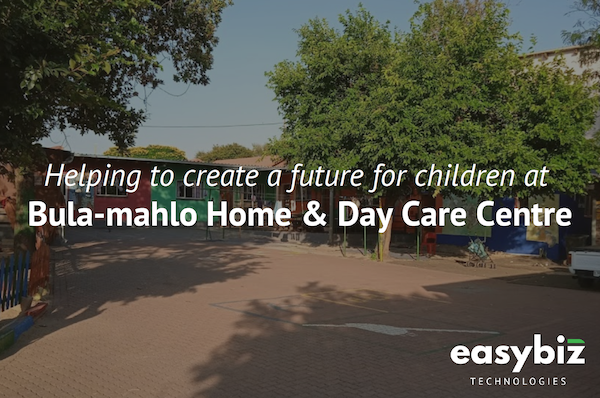
EasyBiz – helping to create a future for children in need

EasyBiz – helping to create a future for children in need

Children are the future of every nation; however, when they don’t receive the right care and don’t have access to education, they are put at a disadvantage. Regina Sekgobela was determined to not let this happen to the children placed in her care at the day care and children’s home she set up in Thembisa. And when she received a donation of 12 training computers from EasyBiz Technologies, her goal to provide education for the children was made that much easier.

Bula-mahlo Home & Day Care Centre (BHDCC) was opened in 1989 at first as a crèche and day care centre to provide education and childcare services to the community of Tembisa. Then a crisis developed in Tembisa, and many abandoned and abused children were left with no one to care for them. ‘Ma Regina’, as she’s fondly known, responded to the call to become a foster mother to the children.

Soon, more children were brought to her by police and social workers, and the increase in the number of children meant that the home had to apply to become a non-profit organisation (NPO) in order to raise more funds. Currently, 20 children attend the crèche for day care and 20 children (ranging in age from two to 16) receive full-time care and include orphaned and foster children, as well as missing and abused children that have been placed in Sekgobela’s care while awaiting trial.

“Education is a vital part of caring for children, and to create possibilities for future careers in a technology-driven world, it’s essential for them to have access to computers,” says Clive Sekgobela, at Bula-mahlo Home. “However, providing computers for the children was simply not possible before, due to financial constraints.”

The team at EasyBiz Technologies heard about the home’s plight and realised they could help in a significant way. By donating 12 computers, EasyBiz was able to provide something meaningful to the children. The company was thrilled to have the opportunity to help the underprivileged and give back to the community. It was important to the EasyBiz team to be able to improve the lives of the children at the home and offer them the benefit of technology.

Because of the wonderful work done at Bula-mahlo Home, it was easy to choose them as a beneficiary. As children are the future of our country, EasyBiz wanted to play a meaningful role in their success in the future and would also like to help the home again when possible. The company has donated to other causes as well and intends to continue to do so.

Bula-mahlo Home’s mission is to provide quality education for the children, and make it easily accessible and affordable to the community. The donation of the computers will provide the children with many benefits, including:

  • Giving them greater independence – it can encourage the children to do research and follow independent thinking.
  • Providing a sense of community and social interaction – schoolwork, games and group activities encourage group collaboration.
  • Increasing their engagement and interaction – technology encourages social interaction and can lead children to become more active in the classroom and in general.
  • Developing core competencies – technology in early childhood helps develop hand-eye coordination and fine motor skills, and critical thinking skills are needed to do research, write reports and analyses, and perform other tasks later in life.
  • Enabling economic success – exposure to technology can help the children develop the skills they can use in high-level, lucrative jobs in the future.

“Ma Regina wants to provide a special space for children to dream of a better future than the one handed to them by circumstance. Therefore, being able to give the children access to these computers has made her job and her mission that much easier,” concludes Sekgobela.

ENDS

Sign up for our EasyBiz Newsletter

Stay up to date with the latest payroll & HR trends

Please fill out the form below to receive the trail demo link

Personal Information
Where a party receives any personal information (“PI”) related to the other party, the party who receives the PI, will comply with and have adequate measures in place to ensure that its employees, agents, subsidiaries and representatives comply with the provisions and obligations contained in the Protection of Personal Information Act, No. 4 of 2013. Any PI pertaining to one party which is required by the other party, will only be used by that other party for the purposes of this contract and will not be further processed or disclosed without the written consent of the latter and the recipient of that PI will take all reasonable precautions to preserve the integrity and prevent any corruption or loss, damage or destruction of the PI. If and when the contract is terminated, each party will, save to the extent that it is required to do otherwise by any applicable law, erase or cause to be erased, all PI and all copies of any part of the PI relating to the other party”.